Why You Should Study Graphic Design Online
in 2026
Discover the key benefits of studying graphic design online and explore the career scope, job roles, and growth opportunities waiting in 2026.
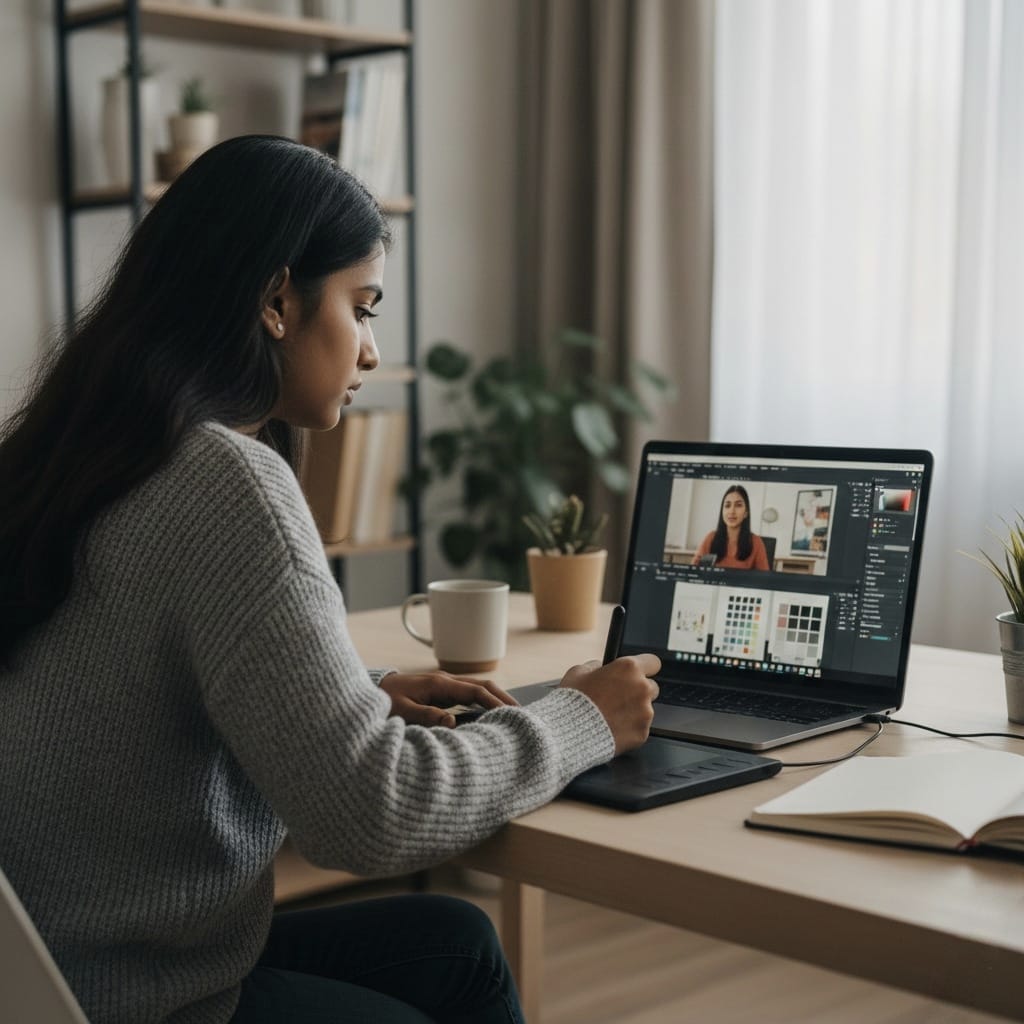
Table of Contents
The Rise of Online
Graphic Design Learning
In today’s fast-paced digital world, creativity is no longer confined to studios or classrooms. With the boom of online graphic design courses, anyone with passion and determination can learn professional design skills from home. As we step into 2026, the demand for skilled designers is skyrocketing from startups and agencies to content creators and global brands, every business needs eye-catching visuals. Studying graphic design online not only saves time and money but also offers flexibility and global career opportunities.
1. Flexibility to Learn Anytime, Anywhere
One of the biggest advantages of learning graphic design online is flexibility. Whether you’re a student, freelancer, or working professional, you can schedule your lessons according to your own routine. No need to commute or attend fixed classes just log in, learn, and practice from the comfort of your home. Online learning gives you complete control over your pace and progress.
2. Access to Global Mentors and Updated Content
Online platforms connect you with experienced mentors and trainers from across the world. These instructors often work in real-world design agencies or freelance for top brands. As a result, you gain up-to-date knowledge of the latest design trends, tools, and software like Adobe Photoshop, Illustrator, and Figma. Plus, online programs are regularly updated to include new techniques that traditional institutes might take months to adopt.
3. Affordable Learning with Lifetime Access
Traditional design institutes often charge a hefty amount, but online graphic design courses are much more affordable. Many offer lifetime access to recorded sessions, templates, and design resources, so you can revisit lessons anytime. You save money not just on tuition, but also on travel, accommodation, and printed materials — making online learning a budget-friendly option without compromising quality.
4. Real-World Projects and Portfolio Building
Online courses today focus on practical learning rather than just theory. You’ll work on real-world projects like social media posts, brand logos, marketing materials, and website designs. These projects help you build a professional portfolio that showcases your creativity and technical skills. A strong portfolio increases your chances of getting freelance gigs, internships, or even full-time design roles.
5. Vast Career Opportunities in 2026 and Beyond
The career scope for graphic designers is expanding rapidly. By 2026, industries like digital marketing, e-commerce, gaming, and content creation will rely heavily on visual storytelling. Skilled designers can work as UI/UX designers, brand identity experts, motion graphic artists, or freelancers serving international clients. With remote work becoming the norm, online-trained designers can easily collaborate with global teams and earn from anywhere.
6. Continuous Learning and Networking Opportunities
Most online graphic design programs come with community access — allowing students to connect, share feedback, and grow together. You can join design challenges, collaborate on creative projects, and network with industry professionals. This exposure helps you stay motivated, updated, and connected with potential clients or employers.
FAQ: Fit
Answers Quickly
Yes! Most online courses start from beginner level and guide you step-by-step through tools, design principles, and practical projects.
Typically, it takes 3 to 6 months of consistent learning and practice to start creating professional-quality designs.
You’ll mainly use tools like Adobe Photoshop, Illustrator, Canva, and Figma. Most courses guide you through setup and free alternatives too.
Absolutely. Certified online courses demonstrate your skills and commitment to learning a strong point in your portfolio or resume.
Yes, many students start freelancing after completing their online training, offering logo design, branding, and social media services worldwide.
Yes! Most online courses start from beginner level and guide you step-by-step through tools, design principles, and practical projects.
Typically, it takes 3 to 6 months of consistent learning and practice to start creating professional-quality designs.
You’ll mainly use tools like Adobe Photoshop, Illustrator, Canva, and Figma. Most courses guide you through setup and free alternatives too.
Absolutely. Certified online courses demonstrate your skills and commitment to learning a strong point in your portfolio or resume.
Yes, many students start freelancing after completing their online training, offering logo design, branding, and social media services worldwide.